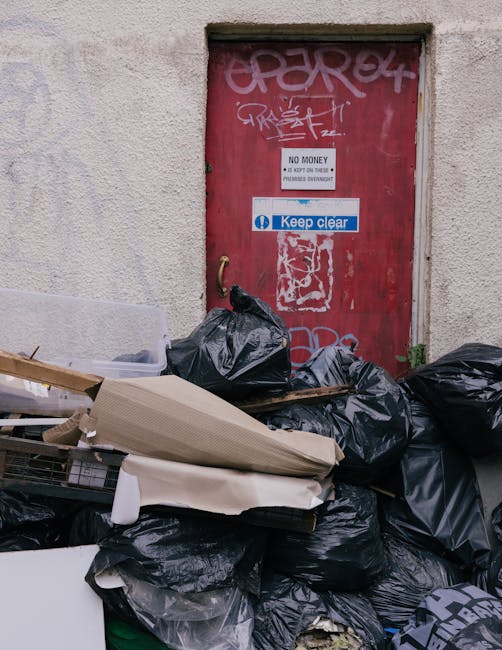
Real cost guide Bayswater rubbish removal vs skip hire

If you are weighing up rubbish removal vs skip hire in Bayswater, the real question is not just "which is cheaper?" It is usually: what will cost less once you factor in parking, timing, labour, access, permits, and the hassle of getting the job done twice because the first choice was awkward. In a busy part of west London, that difference can be bigger than people expect.
This guide breaks down the real-world costs, the hidden extras, and the situations where each option makes sense. We will look at everyday jobs like flat clearances, garden waste, builders' rubble, and furniture disposal, then compare the pros and cons in plain English. By the end, you should have a much clearer sense of whether a skip or a man-and-van style rubbish clearance is the better fit for your place, your budget, and your patience. And let's face it, patience matters when you are staring at a hallway full of old junk.
Why Real cost guide Bayswater rubbish removal vs skip hire Matters
In Bayswater, the cost decision is rarely straightforward. Streets can be tight, parking is limited, and many properties are flats or converted houses where access is not exactly generous. A skip that looks economical on paper can become less attractive once you add permit costs, space restrictions, and the time it takes to load everything yourself.
On the other hand, rubbish removal can appear more expensive at first glance because you are paying for labour as well as transport. But if the team does the lifting, loading, and tidying in one visit, you may save money in ways that do not show up in the headline price. That is the bit people miss. They compare the sticker price and stop there.
In practical terms, the right choice depends on:
- how much waste you actually have
- how easy it is to access the property
- whether you can fill a skip quickly
- if you have help to load heavy items
- how long you need the waste to sit on site
- whether the waste is mixed, bulky, or awkward
For example, if you are clearing a Bayswater flat after a move, a skip may not be the neatest option. If you are mid-renovation and producing waste over several days, a skip can be perfectly sensible. Different job, different economics. Simple as that.
For people planning larger household or tenancy clearances, pages like flat clearance and home clearance can be useful next steps when comparing the practical side of clearance work.
Expert summary: In Bayswater, the cheapest option on paper is not always the cheapest in real life. Access, labour, parking, and time usually decide the final bill more than people expect.
How Real cost guide Bayswater rubbish removal vs skip hire Works
Both options remove waste, but they do it in very different ways.
Skip hire
With skip hire, a skip is delivered to your property or a permitted spot, you fill it yourself, and it is collected later. It is usually priced by size and hire period. The bigger the skip, the more you pay. The longer you keep it, the more you may pay. If a permit is needed for the road, that can add another layer of cost and admin.
The appeal is obvious: you can chip away at the job when it suits you. That works well for renovations, DIY projects, or garden jobs spread over several days. But skips can be less convenient when the waste is heavy, dirty, or upstairs. Carrying a sofa down three flights of stairs on your own is a very different kind of weekend.
Rubbish removal
Rubbish removal, often called waste clearance or man-and-van clearance, is more service-led. A team arrives, loads the waste for you, and takes it away the same day or at a booked time. Pricing is usually based on volume, weight, item type, access, and labour. In many cases, you are paying for speed and convenience as much as disposal.
This can work especially well if you have bulky items, a full flat, or a property where manoeuvring a skip would be awkward. It is also useful when you want one clean sweep rather than a week of living next to a metal box outside your window.
If you are comparing service types, the broader waste removal page is a sensible place to understand how clearance jobs are typically handled.
What drives the final price?
Neither option has a single fixed price, and anyone pretending otherwise is doing you a disservice. The final cost usually depends on:
- volume: how much waste there is
- weight: especially important for rubble, soil, and mixed heavy waste
- access: stairs, narrow hallways, parking distance, basement access
- time: same-day jobs, weekend slots, or urgent bookings
- permit or parking issues: more relevant to skips on public land
- labour: whether loading is included
- special items: furniture, white goods, construction debris, or mixed waste
The important thing is to compare like with like. A skip quote may look lower until you add a permit and your own labour. A clearance quote may look higher until you realise the team is doing the lifting, loading, and disposal in one go.
Key Benefits and Practical Advantages
There is a reason both options stay popular. They each solve a slightly different problem.
Benefits of skip hire
- Good for ongoing jobs: ideal if waste is created gradually over several days.
- Flexible loading: you can fill it in your own time.
- Straightforward for DIY: useful for kitchen rip-outs, garden makeovers, and recurring rubble.
- Can suit larger volume projects: especially if you already have access and space.
Benefits of rubbish removal
- No heavy lifting for you: the team handles the awkward stuff.
- Fast turnaround: often much quicker for one-off clearances.
- Better for tight access: useful in flats, terraces, and buildings with stairs.
- Cleaner finish: the waste is gone, rather than sitting outside for days.
For many Bayswater residents, that last point matters more than expected. A skip can sit there for a week, staring back at you like a very expensive metal reminder of unfinished business. Rubbish removal can feel tidier and less intrusive, especially in shared buildings.
Business customers also tend to value predictability. If you are managing a workplace clean-out, a service like business waste removal can be a neater fit than organising a skip around staff, visitors, and access routes.
Who This Is For and When It Makes Sense
This comparison helps a few different kinds of people, and the right answer is not the same for each of them.
Choose skip hire if:
- you have space for a skip on your drive or a permitted road location
- your waste will build up over time
- you are doing DIY or renovation work yourself
- you have able helpers and do not mind loading
- you want a set container on site while the work continues
Choose rubbish removal if:
- you want everything gone quickly
- the waste is upstairs, buried in a loft, or spread around the property
- you have bulky furniture or mixed household items
- you do not want to deal with a permit or skip placement issue
- you need a cleaner, less disruptive solution in a shared street
For example, if you are clearing a rental before new tenants arrive, rubbish removal often wins on speed. If you are renovating a kitchen over two weekends, a skip might be easier to live with. Different rhythm, different method. No need to force one solution into every job.
Estate, decluttering, and downsizing jobs can also point you toward specialist pages such as house clearance or furniture disposal, depending on what needs to leave the property.
Step-by-Step Guidance
If you are trying to decide between the two, use a practical step-by-step approach rather than guessing.
- List the waste type. Is it furniture, renovation debris, garden waste, mixed household items, or a mix of everything?
- Estimate the volume. Think in terms of bags, items, or roomfuls rather than trying to invent a perfect measurement.
- Check access. Can a skip vehicle park safely? Is there space? Are there stairs or narrow corridors?
- Decide who loads the waste. If you are short on time, rubbish removal may be more practical.
- Ask about hidden extras. For skips, ask about permit costs and hire duration. For clearance, ask what is included in the load and whether labour is part of the quote.
- Compare the real total. Not the headline quote. The real total.
- Book based on timing. If the job is urgent or access is tricky, speed may matter more than a small saving.
A simple rule of thumb: if you can fill a skip yourself over a few days without access problems, skip hire can work well. If you need the waste gone quickly, or you do not want to do the lifting, a clearance service often feels like better value. It really is that practical.
For building works and heavier mixed waste, it can also help to review builders waste clearance so you can see whether your job fits a trade-style clearance better than a standard skip.
Expert Tips for Better Results
These are the sorts of things that usually make the difference between a smooth job and an annoying one.
1) Sort by waste type before you book
Mixed waste can cost more than clean, single-stream waste. If you separate furniture, cardboard, garden waste, and rubble where possible, you may improve the quote or at least make the job easier to assess.
2) Measure access like a sceptic
People often say "the van can just get near the door". Sometimes yes, sometimes no. Check stair widths, door swings, lift access, parking restrictions, and whether there is a long carry from vehicle to property. Those details matter in Bayswater more than in a quieter suburban road.
3) Ask what happens to reusable items
If you are clearing decent furniture, ask whether anything can be separated for reuse or recycling. A careful provider should be able to explain the general process. That is where pages like recycling and sustainability can help set expectations.
4) Book before the last minute if you can
Urgent bookings are often more stressful and may cost more. A little bit of planning goes a long way. Even twenty-four hours can make the difference between a tidy, calm job and a panicked one on a wet Tuesday morning.
5) Match the service to the job, not to habit
Some people always order a skip because that is what they know. Others always want clearance because they dislike lifting. Fine, but pause for a second. The right option should fit the property, the waste, and the timeline. Habit is not a strategy. Sorry, but it isn't.
Common Mistakes to Avoid
These mistakes show up again and again, and they are all avoidable.
- Comparing quotes without checking what is included. A cheap skip may not include a permit. A clearance quote may include labour, transport, and disposal.
- Underestimating the amount of waste. People often guess low, then end up with overflow piles.
- Ignoring access problems. A skip may not fit. A clearance team may need more time if the carry is long.
- Leaving booking too late. That is how extra cost sneaks in.
- Mixing prohibited or awkward materials without asking first. Some waste types need special handling.
- Forgetting the disruption factor. A skip outside your property is visible, takes space, and can become a nuisance in a tight street.
Another common one: people pay for a skip, then realise they still need to hire labour to get the waste into it. At that point the "cheap option" is not cheap anymore. It happens more than you would think.
Tools, Resources and Recommendations
You do not need fancy software to make a good choice. A few simple tools are enough.
- Phone camera: take clear photos of the waste pile from a few angles.
- Room-by-room list: helpful for bigger flat and house clearances.
- Rough volume estimate: count bin bags, boxes, or large items.
- Access notes: narrow lane, stairs, lift, parking restrictions, loading distance.
- Timeline: note whether the job is same-day, weekend, or flexible.
For Bayswater residents and landlords, it can also help to think in property types rather than just waste types. A small flat clearance is different from a loft clearance, even if the amount of waste looks similar from the doorway. If the mess is tucked away above your head in a dusty loft, that extra access effort changes the economics quite a bit. Same pile, different headache.
Useful service pages to review while planning include loft clearance, garage clearance, and garden clearance, because each one involves different access and loading patterns.
Law, Compliance, Standards and Best Practice
When waste is being removed, the cheapest quote should never be the only filter. In the UK, proper handling, transport, and disposal matter. You want a provider that works in line with accepted waste-handling practice, keeps things safe, and can explain what happens to the material after collection.
From a customer point of view, the main best-practice questions are simple:
- Is the waste being handled safely?
- Is the collection method suitable for the property?
- Are workers covered by sensible health and safety procedures?
- Does the business communicate clearly about pricing and what is included?
- Can they explain recycling or disposal routes in plain language?
If you are hiring a clearance service, it is also sensible to look for evidence of proper insurance and safety arrangements, plus clear terms and fair payment processes. Those things do not make the job glamorous, obviously, but they do make it more trustworthy. The same goes for honest service pages such as insurance and safety, payment and security, and terms and conditions.
If a job involves commercial waste, shared access, or a larger mixed clear-out, checking the provider's wider policies can also give you confidence. It is not exciting reading, but it is useful reading. A bit boring, yes. Still useful.
Options, Methods, or Comparison Table
Here is a practical comparison to help you think clearly about the likely cost and convenience differences.
| Factor | Skip hire | Rubbish removal |
|---|---|---|
| Typical cost structure | Container size, hire period, permit if needed | Volume, weight, labour, access, item type |
| Best for | DIY, ongoing work, repeated loading over time | Quick clear-outs, bulky items, awkward access |
| Labour required from you | High | Low |
| Speed | Slower, unless the job is already underway | Often faster, sometimes same day |
| Space needed | Needs a suitable spot | Usually no on-site storage needed |
| Street impact | Can block space or need a permit | Usually minimal |
| Best fit in Bayswater | Properties with easy access and room | Flats, terraces, tight streets, busy households |
A useful shorthand is this: skip hire is a container solution, while rubbish removal is a labour solution. That one sentence clears up a lot. If you mainly need storage for waste, choose the container. If you mainly need the mess gone, choose the labour.
Case Study or Real-World Example
Picture a Bayswater flat after a tenant move-out. There is a worn sofa, a broken desk, a few bags of mixed clutter, some old curtain rails, and a dusty loft box or two. The hallway is narrow. The building shares a front entrance. Parking is tight. The landlord wants the flat ready quickly.
In that situation, skip hire sounds tidy in theory, but it creates problems in practice. Where does the skip go? How long will it sit there? Who loads the sofa? Is there room for a skip truck to get in and out without causing trouble on the road?
Rubbish removal is often the more sensible answer. A team can come in, clear the items, and leave the place ready for cleaning. You pay for convenience, but you also avoid the knock-on costs of time, stress, and access complications. The quote may not be the lowest on a spreadsheet, yet the real cost to the landlord can still be lower.
Now flip the scene. A homeowner is doing a small bathroom renovation over a week, with tiles, old plasterboard, and packaging arriving gradually. There is a driveway and plenty of space. In that case, skip hire may be the more efficient option because the waste will keep coming and the skip can sit there until the work is finished. Different picture. Different winner.
If your own situation involves a full house or estate clearance, it may be worth looking at house clearance and furniture clearance as more tailored alternatives to doing everything yourself.
Practical Checklist
Use this quick checklist before you book anything.
- Have I identified the main waste type?
- Have I estimated the rough volume honestly?
- Is there enough space for a skip, if I choose one?
- Would I actually want to load the waste myself?
- Are stairs, lifts, parking, or narrow access likely to affect the price?
- Do I need the job done quickly?
- Have I asked what is included in the quote?
- Have I checked whether the provider can handle my particular mix of items?
- Do I understand any timing or access restrictions?
- Have I looked at the total value, not just the headline figure?
If you can tick most of those off, you are already ahead of most people. Truth be told, half the stress in waste removal comes from unclear assumptions rather than the job itself.
Conclusion
When you compare Bayswater rubbish removal vs skip hire, the real cost is not just the booking price. It is the total of access, labour, disruption, timing, and how many times you want to handle the waste before it finally disappears. For some jobs, a skip is the neatest and cheapest option. For others, rubbish removal saves time, effort, and a surprising amount of hassle.
If your property is tight on space, your waste is bulky, or you simply want the job cleared in one go, a removal service is often the better fit. If you have room, time, and a steady stream of DIY debris, skip hire can still make solid sense. The best choice is the one that matches the job, not the habit.
Get a free quote today and see how much you can save.
And if you are still torn, that is normal. Take a breath, look at the pile properly, and choose the option that gives you the calmest day, not just the cheapest headline.
Frequently Asked Questions
Is rubbish removal cheaper than skip hire in Bayswater?
Sometimes yes, sometimes no. If you need labour, fast collection, or have awkward access, rubbish removal can offer better value overall. If you have easy access and can load waste yourself over several days, skip hire may cost less.
What hidden costs should I watch for with skip hire?
The main ones are permits, extra hire days, and the practical cost of loading the skip yourself. If access is awkward, the job can become more time-consuming than expected.
Why can rubbish removal seem more expensive at first?
Because the quote usually includes labour as well as transport and disposal. That higher headline price can still be good value if it saves you hours of lifting and organising.
What is the best option for a flat in Bayswater?
Often rubbish removal, especially if the flat has stairs, limited parking, or no suitable place for a skip. Flat clearances and bulky item jobs tend to suit service-led collection.
When does skip hire make more sense?
Skip hire makes sense when waste is being generated over time, access is straightforward, and you are happy to load it yourself. It is a good fit for DIY or renovation projects.
Can I mix different types of waste in one load?
Sometimes, but not always. Mixed waste may affect pricing or disposal options. It is best to describe the load clearly before booking so you do not end up with surprises on the day.
How do I estimate the right size or amount?
Take photos, count bags or items, and think in terms of roomfuls or piles rather than guessing in pounds and pence. A rough but honest estimate is usually more helpful than an overly confident one.
Do I need a permit for a skip in Bayswater?
If the skip will be placed on public land or a road, a permit may be needed. The exact requirement depends on the location and arrangement, so always check before assuming it is fine.
Is rubbish removal better for bulky furniture?
Usually yes, especially for sofas, wardrobes, beds, and other heavy items. Furniture disposal is often easier when the lifting is done for you.
What should I ask before booking a clearance service?
Ask what is included, how access affects the price, whether labour is covered, what happens to reusable items, and how the team handles recycling or disposal. Clear answers are a good sign.
How quickly can waste be removed?
It depends on the provider and your location, but rubbish removal can often be arranged faster than skip hire. That can matter a lot when you need a room cleared before the cleaner arrives or a tenant moves in.
What is the safest way to choose between the two?
Match the method to the job. If you want storage for ongoing waste, go with a skip. If you want the waste gone quickly with minimal effort, choose rubbish removal. That is usually the simplest and safest decision.